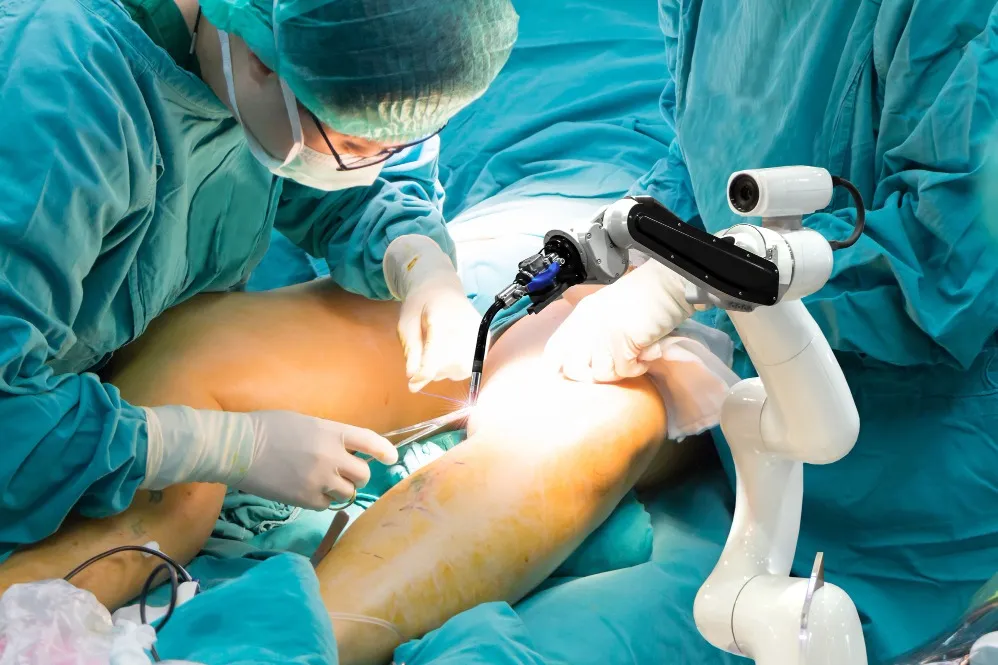
Technology has transformed many areas of healthcare, including orthopaedic surgery. One of the most significant advancements is Advanced Robotic Knee Replacement in Nagarbhavi, which combines the surgeon's expertise with robotic assistance to improve precision during knee replacement procedures.
Patients often wonder whether robotic surgery means a robot performs the operation independently. In reality, the procedure remains entirely under the control of the orthopaedic surgeon, while robotic technology provides detailed planning and real-time guidance.
What Is Robotic Knee Replacement?
Robotic knee replacement is a technology-assisted procedure that helps surgeons position implants with greater accuracy based on the patient's unique anatomy.
Before surgery, detailed imaging is used to create a three-dimensional model of the knee. During the operation, robotic assistance helps the surgeon follow the pre-planned alignment while preserving healthy bone and surrounding soft tissues whenever appropriate.
Why Precision Is Important
Even small differences in implant positioning can influence knee function over time.
Improved surgical precision may contribute to:
- Better joint alignment.
- More natural knee movement.
- Balanced soft tissues.
- Stable implant positioning.
- Improved patient satisfaction in suitable cases.
Every patient's anatomy is different, making personalized surgical planning valuable.
Who May Benefit from Robotic Knee Replacement?
Robotic-assisted surgery may be suitable for individuals with:
- Severe osteoarthritis.
- Chronic knee pain affecting daily activities.
- Knee deformities.
- Reduced mobility.
- Failure of conservative treatments.
- Progressive cartilage damage.
The final decision depends on detailed clinical evaluation and imaging findings.
Common Myths About Robotic Surgery
Many misconceptions prevent patients from exploring this technology.
Myth 1: The robot performs the surgery.
The surgeon performs every step. Robotic technology serves as an advanced guidance system.
Myth 2: Recovery is instant.
Recovery still requires physiotherapy, exercises, and gradual rehabilitation.
Myth 3: Everyone is eligible.
Not every patient requires robotic-assisted surgery. Suitability depends on medical evaluation.
Myth 4: It is only for younger patients.
Age alone does not determine eligibility. Overall health and joint condition are more important factors.
Preparing for Surgery
Preparation remains similar to conventional knee replacement.
Patients may undergo:
- Clinical examination.
- Imaging studies.
- Blood investigations.
- Medical fitness assessment.
- Medication review.
- Pre-operative physiotherapy guidance.
Understanding the procedure beforehand often reduces anxiety.
Recovery After Robotic Knee Replacement
Recovery focuses on restoring mobility safely and gradually.
Typical rehabilitation includes:
- Early movement after surgery.
- Walking with support.
- Muscle strengthening.
- Flexibility exercises.
- Regular follow-up appointments.
- Progressive return to normal routines.
Following the rehabilitation plan consistently is essential for achieving the best possible outcome.
Why Surgeon Expertise Still Matters Most
Although robotic systems provide advanced guidance, successful outcomes depend largely on the surgeon's knowledge, planning, and clinical judgment.
Patients should choose a specialist who has experience in both conventional and robotic joint replacement techniques and who recommends surgery only when clinically appropriate.
Seeking Personalized Orthopaedic Care
People living in Nagarbhavi increasingly seek treatment options that combine medical expertise with advanced technology. At AHA Ortho Care, Dr. HANUME GOWDA carefully evaluates each patient's condition before determining whether robotic knee replacement is the most appropriate treatment. Every surgical plan is individualized to match the patient's anatomy, lifestyle, and long-term mobility goals.
Those interested in learning more about robotic joint replacement can also refer to the educational information available through ahaorthocare.in to better understand the procedure and recovery process.
Choosing advanced robotic knee replacement is not simply about technology. It is about combining precise planning, experienced surgical care, and structured rehabilitation to help patients regain confidence in their movement.
Keywords